












Your E-mail:
Get the latest news, tips and
free advice every month
Cast Your Vote
Do your summer vacation plans include your dog?
Local Guides


Want more information?

Click Here
Printer Friendly Bookmark and Share

Dog with Breathing Problems Needs Help

Lifestyle changes and medications can help a dog’s collapsed trachea.

By Jon Geller, DVM

Q. My dog is a male, two-year-old Yorkshire  Terrier. B.J. is very active and maintains a healthy weight (8 lbs.), but he is having problems with a collapsing trachea. His cough is hoarse and he seems to have trouble breathing. I have asked my vet about ways I could help him and he said that there is nothing you can do except surgery if it gets really bad. Is there anything that I can do to either give him some relief or make sure this problem doesn’t get worse?

A. Collapsing trachea is usually a breed-related genetic disease that is more common in Yorkshire Terriers and other small breed dogs such as Miniature Poodles, Chihuahuas and Pomeranians. It is caused by a weakening of the cartilage that makes up the trachea. The circular rings of the trachea tend to collapse inward when an affected dog is breathing in, especially if they are breathing harder than usual. It can become life-threatening in hot, humid weather or if your dog is overweight.
 
Although it is true that a surgical procedure is the only way to correct this condition, there are numerous medications and lifestyle changes that can help reduce its severity. First, let's talk about the surgery: The procedure is actually not a surgery, but a procedure using a bronchoscope. An artificial, synthetic tracheal segment is placed inside the collapsing trachea to keep it from collapsing. The bronchoscope allows this to be done without making any incisions, essentially a bloodless procedure. It does require general anesthesia, however, and is usually performed by an internal medicine specialist. As you might expect, it is somewhat expensive.
 
A much less expensive option is to make some lifestyle changes with your dog. First, obesity will make a collapsing trachea worse, so make sure your Yorkie is not overweight. Most dogs improve drastically once they lose unnecessary weight. Secondly, excitement will also cause the coughing to become worse, so it is better to minimize any unnecessary excitement. Avoid using a leash on his collar, because the pull on the collar will also make the condition worse. Use a harness instead of a leash. Finally, humid conditions can make tracheal collapse worse, so if you have a choice, try to create as dry a climate as possible, even using a dehumidifier.
 
Your veterinarian can also prescribe some medications that may be helpful, including butorphanol, theophylline (Theodur sustained release tablets) and prednisone. These will all reduce the frequency and severity of the coughing; they may be necessary long term.
 
Make the lifestyle adjustments and then talk to your veterinarian about trying some medications. If you can afford it, consider the bronchoscope procedure as a permanent fix.

 Give us your opinion on
Dog with Breathing Problems Needs Help

Submit a Comment   Join Club
Earn 1,000 points! What's this?
Reader Comments
Good Advise
Richard, Fort Worth, TX
Posted: 4/29/2012 2:28:18 AM
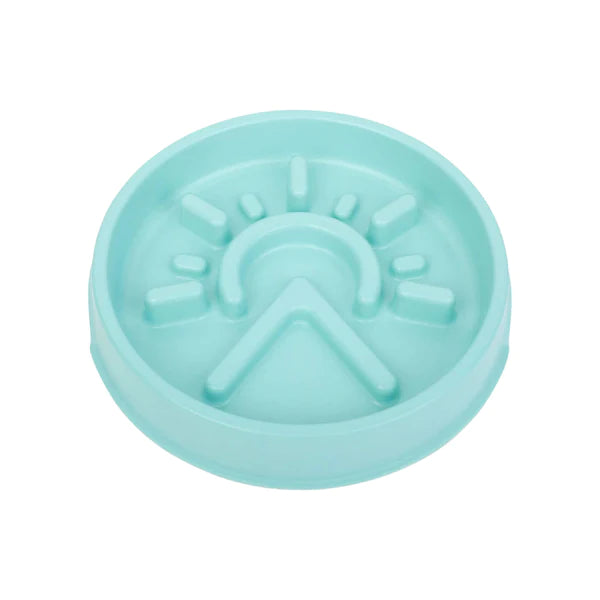
Great article but how can I tell if it is reversed sneezing or a collapsing trachea in my 10 lb chihuahua/rat terrier. The vet we are currently using disgards it as reversed sneezing but it happening more and more especially when she eats or drinks anything. It is almost every time and we were thinking it is because she eats to fast. We got a special bowl for her to slow her down but it hasn't helped.
Kathy, Yorkville, IL
Posted: 9/17/2010 9:28:03 AM
My lhasa has a collapsed trachea and an enlarged heart as well as a severe heart murmur. She also was diagnosed with epilepsy about 4 years ago and has been on a monitored theraputic doseage of phenobarbital for about 3 years. She has been on Theophylline and torbutrol for the coughing. It helps a bit, but she still has a great deal of difficulty when sleeping (I thought she had sleep apnea at first which is when the vet suspected collasping trach and took xrays). Clearly, it is not good for her to get excited. She is about 9ish (I rescued her from a puppymill at somewhere around a year or two of age, hence all the medical problems from bad inbreeding)and is completely obsessed with food to the point where she cries and shakes and constantly is on the lookout for it. This behavior began about 3 years ago. I was told it could be a side effect of the epilepsy or phenobarb. Has anyone heard of this or have any good advice? She has been on a diet of WD perscription food for most of her life since she has irritable bowel syndrome as well.
Susyn, Delray Beach, FL
Posted: 7/5/2010 9:11:24 AM
Thanks so much for the info-I have a Pom and wondered about this...
Stephanie, North Canton, OH
Posted: 6/20/2010 7:31:33 PM
View Current Comments

Name:
Address:
City:
State:
Zip Code:
Email:

Border Collies
Buy Now
Australian Shepherds
Buy Now
Dog Training Solutions
Buy Now
Become a fan of DogChannel on Facebook Follow DogChannel on Twitter Follow DogChannel on Google+ Follow DogChannel with RSS
Get social and connect with DogChannel.


Hi my name's maggie-mae

Visit the Photo Gallery to
cast your vote!