











Your E-mail:
Get the latest news, tips and
free advice every month
Cast Your Vote
Do your summer vacation plans include your dog?
Local Guides


"Petmate Deluxe Edition Wire Kennel (Medium; 25"" L X 18"" W X 22.5"" H; For Medium Dogs)"
Regular Price: $99.99
Sale Price: $84.97
Printer Friendly Bookmark and Share

Study Reveals Confusion Over Senior Dog Food

The nutritional content of senior diets varies as widely as owners’ perceptions about them.

Posted: April 11, 2011, 3 a.m. EDT

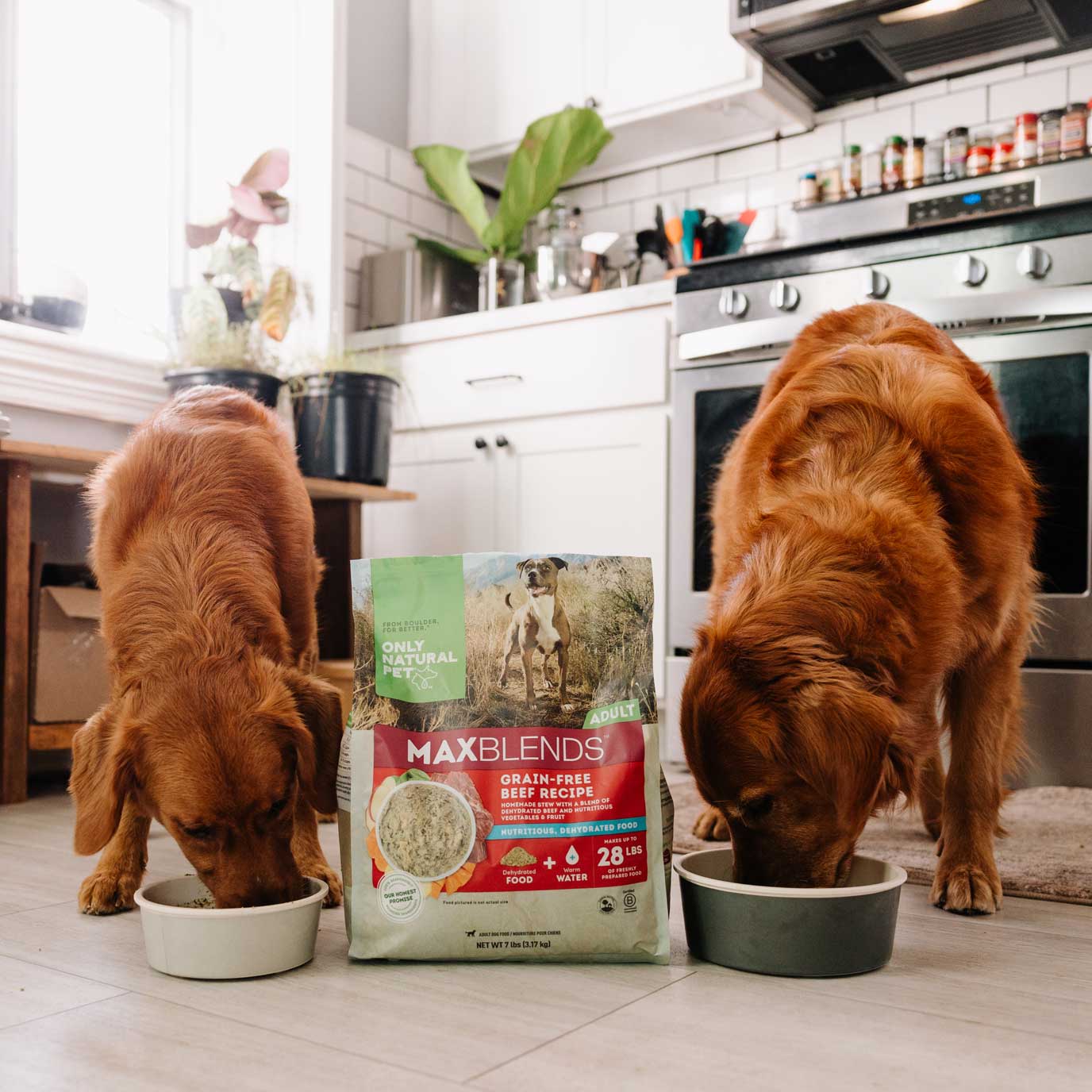
Golden Retriever
Every senior diet is different and may or may not be appropriate for an individual dog.
How people perceive senior dog foods is quite different than the actual nutritional content of the food, according to a study published by veterinary nutritionists at the Cummings School of Veterinary Medicine at Tufts University.

For example, most of the survey respondents felt that senior dog foods likely contained fewer calories. However, calories in the senior foods studied ranged from 246 to 408 calories/cup. While some dogs gain weight as they age, others lose weight. This means that the large range in calories might prove problematic for owners of older dogs, said Lisa Freeman, D.V.M., Ph.D., who worked on the study with Dana Hutchinson, D.V.M.

The researchers polled more than 1,300 people online about their perceptions about foods marketed for old dogs. Their responses were correlated with the actual nutritional content of almost 40 commercially available “senior” dog foods.

About 43 percent of respondents fed their dogs a senior diet, but only one-third of them did so on the advice of a veterinarian. In addition, about 84.5 percent felt that senior dogs have different nutritional needs compared to adult dogs.

The study also revealed that most respondents believed that senior dog foods likely contained less fat, protein and sodium. Among the sample senior dog diets surveyed, these, too, varied widely: protein 4.8 to 13.1 g/100 kcal, fat 2.4 to 6.3 g/100 kcal and sodium 33 to 412 mg/100 kcal.

“If an owner, for example, had a senior dog with heart disease, they might be inclined to feed them a senior food, thinking that it had less sodium,” Dr. Freeman said. “Instead, they might replace a diet that had a perfectly acceptable amount of sodium for one that is considerably higher.”

The study illustrates a great deal of confusion in the marketplace, Freeman said. It’s important for owners to be aware that every senior diet is different, and it may or may not be appropriate for an individual dog, depending upon his or her body condition and health, she added.

“The decision to buy a certain type of food for your aging dog is an emotional one: you want to extend her life and ensure she’s healthy well into her twilight years,” Freeman said. “However, not all older dogs require a senior diet, and if you do decide to change to a senior food, talk to your veterinarian, because these foods are not all the same. It’s important to select one that is right for each dog.”

The researchers noted that the Association of American Feed Control Officials (AAFCO) and National Research Council have not set official dietary requirements for aging dogs. As such, foods marketed for “longevity” and “maturity” or “senior,” “old” or “mature” dogs do not have to adhere to a standard nutrition profile beyond the AAFCO nutrient profile minimums for adult dogs.

Hutchinson and Freeman are continuing their research to help determine optimal nutritional levels for aging dogs.

The study appears in the International Journal for Applied Research in Veterinary Medicine, Volume 9 No. 1.

 Give us your opinion on
Study Reveals Confusion Over Senior Dog Food

Submit a Comment   Join Club
Earn 1,000 points! What's this?
Reader Comments
Interesting.
Stephanie, North Canton, OH
Posted: 4/12/2011 5:59:14 PM
It seems that every senior dog has different health issues and therefore needs different food. Just like humans and any other animal blessed to live past their prime.
Galadriel, Lothlorien, ME
Posted: 4/11/2011 11:51:30 PM
The lack of good information on nutrition both for the lay public and for veterinarians is unfortunate. Many vets profit from the sale of "diets" and recommend based on profit margin rather than nutritional facts. It's also unfortunate that there are not more stringent requirements by AAFCO rather than less.
Carol, Silver Spring, MD
Posted: 4/11/2011 9:08:00 AM
View Current Comments

Name:
Address:
City:
State:
Zip Code:
Email:

Dog Training Solutions
Buy Now
Border Collies
Buy Now
House Training
Buy Now
Become a fan of DogChannel on Facebook Follow DogChannel on Twitter Follow DogChannel on Google+ Follow DogChannel with RSS
Get social and connect with DogChannel.


Hi my name's maggie-mae

Visit the Photo Gallery to
cast your vote!